

AhlulBayt News Agency: An Iranian Islamic scholar has called for the development of a new human rights charter rooted in Eastern traditions as an alternative to the Western framework.
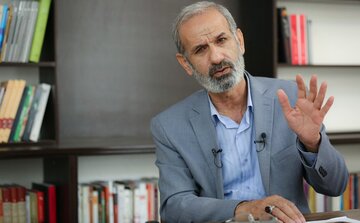
During an interview with IQNA, Hojat-ol-Islam Mohsen Alviri, a professor of history, emphasized the need for an Eastern approach to human rights. He argued that both religious and non-religious traditions across Asia could offer an alternative to the Western-dominated framework established in the mid-20th century.
Alviri highlighted that the global civilizational landscape is shifting, with the East reemerging as a cultural and intellectual force. This transformation, he noted, creates an opportunity to reexamine the foundations of international human rights.
“An undeniable civilizational shift is taking place in the world,” Alviri stated, adding, “The Eastern civilizational sphere is once again asserting itself and narrowing the space for the dominant Western civilization.”
He pointed out that the modern human rights framework, formalized in 1948 through the Universal Declaration of Human Rights (UDHR), was primarily shaped by Western norms, although some of its roots trace back to Eastern cultures. Given the East's growing global influence, he believes it is now possible—and necessary—to revisit and propose a new, inclusive model.
Alviri referenced ancient legal systems such as the Code of Hammurabi and the Cyrus Cylinder, describing them as historically significant contributions to human rights thought despite being non-religious. Additionally, he cited religious traditions from Islam, Christianity, Judaism, Buddhism, and Hinduism as valuable ethical sources.
He stressed the importance of Islamic teachings, particularly those of the Ahl al-Bayt (AS), in shaping a new human rights charter. However, he acknowledged the necessity of dialogue and inclusivity, emphasizing that different religious and philosophical perspectives must be considered.
Quoting Imam Ali (AS), the first Shia Imam, Alviri underscored human solidarity: "People are either your brothers in religion or your equals in creation." He described this principle as a unifying idea capable of fostering consensus and inclusivity.
Alviri asserted that this initiative is not merely a political or ideological response but rather a civilizational undertaking. He believes it could become a significant strength for the Eastern world in its engagement with global systems.
/129



Your Comment